Living Room Lighting Design: Layering Light for Atmosphere and Function
Lighting is the most powerful design tool in a living room. It shapes how the room feels, how it functions, and how it looks at every hour of the day. A single overhead light makes a room feel flat and uninviting. Layered lighting creates depth, warmth, and atmosphere.
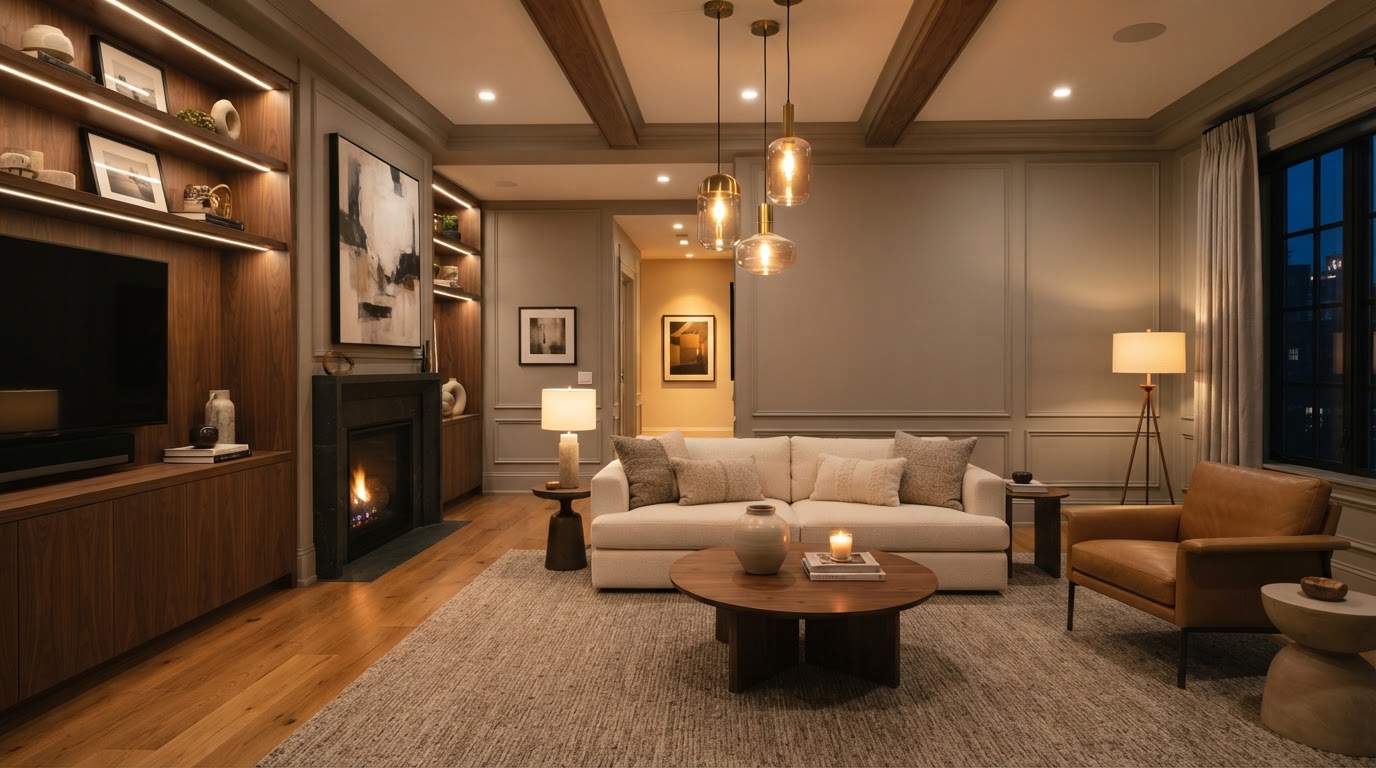
The best living rooms use three layers of light — ambient, task, and accent — to create a room that feels right from morning to night. The right lighting design is what makes a living room feel intentional rather than just furnished.
Here is how to layer lighting in a living room for atmosphere and function.
1. Start With Ambient Light
Ambient light is the base layer — the overall illumination that lets you see and move through the room. Recessed ceiling lights, a central fixture, or a flush mount provide the base. The goal is even, comfortable light without harsh shadows.
Think about dimmable controls so the ambient light can shift from bright for daytime to soft for evening. Flexibility is part of good lighting design.
2. Add Task Lighting
Task lighting is the light you use for a specific purpose — reading, working, or a hobby. Floor lamps beside a reading chair, a table lamp by a sofa, or a swing-arm sconce over a chair all provide focused light where you need it.
Think about where you actually use the room and add task lighting there. The right task light makes the room more functional.
3. Layer Accent Lighting
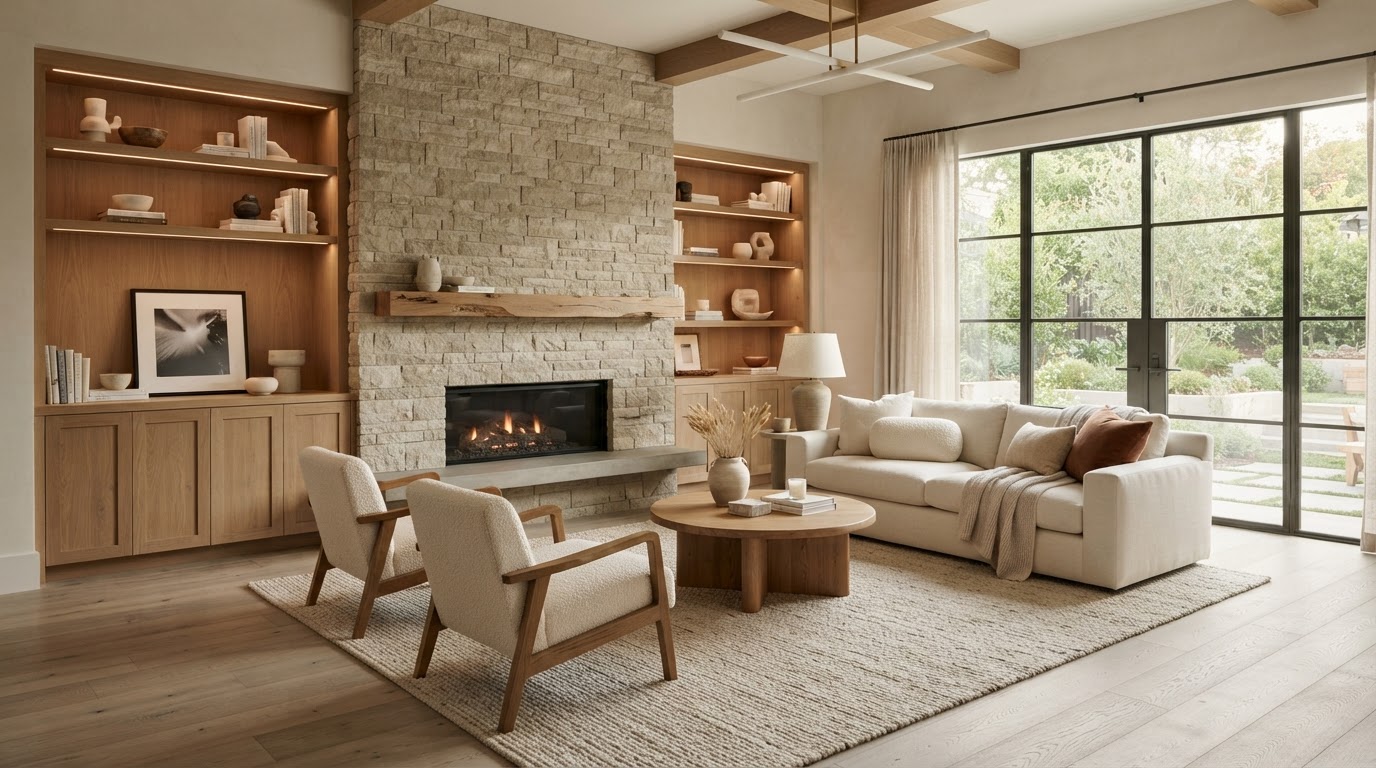
Accent lighting is what makes a room feel designed. It highlights architecture, art, or features — uplighting on a fireplace, a picture light over art, or strip lighting on shelving. Accent light adds depth and drama.
Think about what you want to highlight and add accent lighting there. The right accent light makes the room feel intentional.
4. Use Dimmable Controls
Dimmable lighting is what lets a living room shift from day to night. A room that is bright for the afternoon should be able to feel warm and intimate in the evening. Dimmers on every layer of light give you that control.
Think about how the room feels at different times and design the controls to support it. Flexibility is the key to good lighting.
5. Consider Natural Light
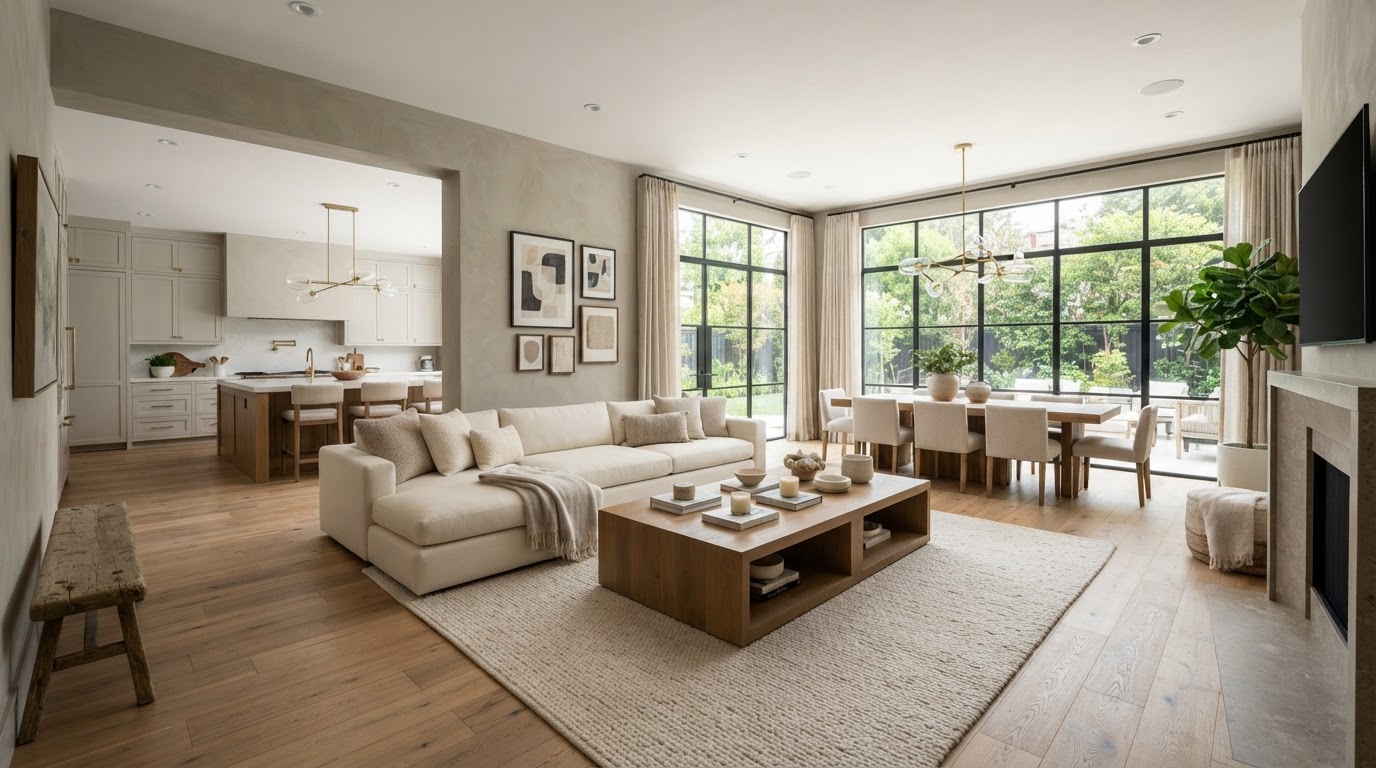
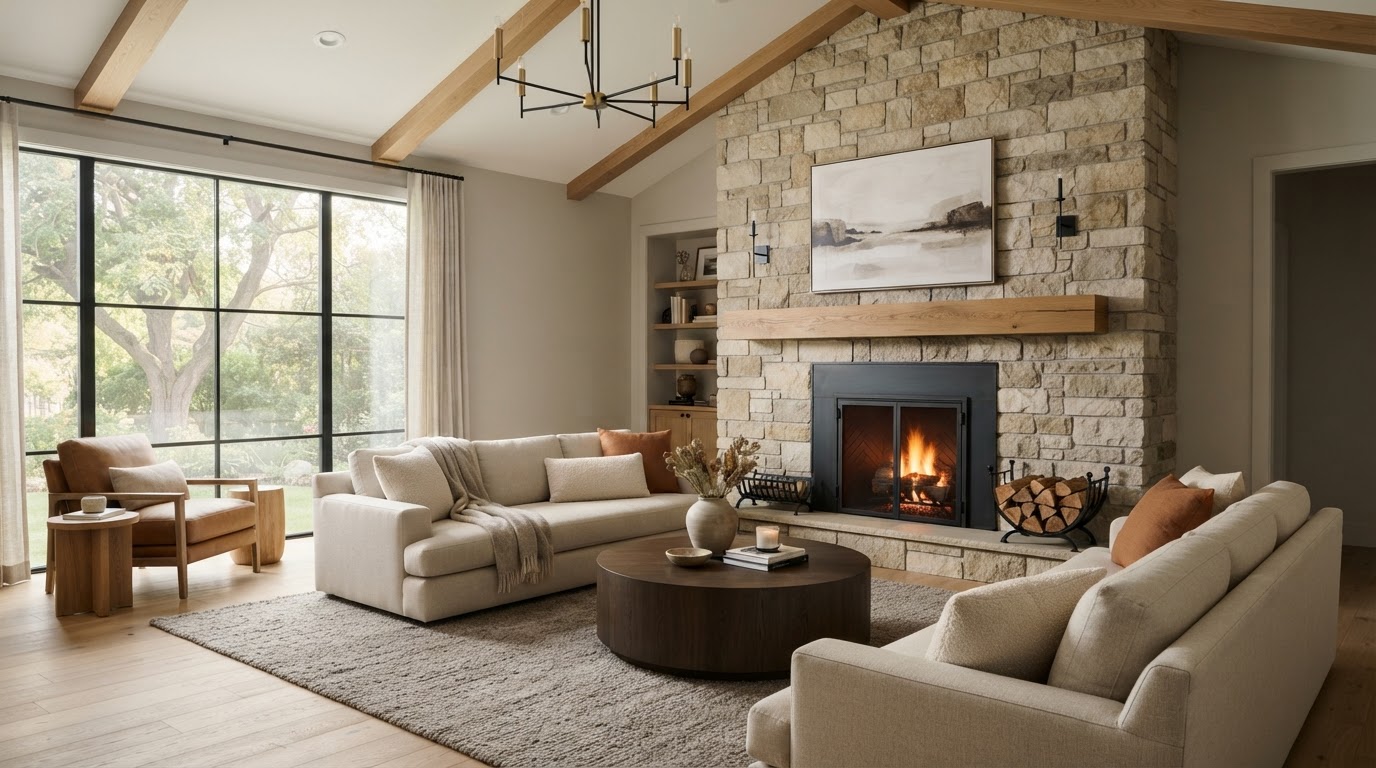
Natural light is part of the lighting design. Windows, skylights, and the orientation of the room all shape how the living room feels during the day. The artificial lighting should complement the natural light, not fight it.
Think about how the light moves through the day and design the windows and the lighting to work together. The best living rooms use both well.
Ready to Design Your Living Room Lighting?
If you are planning a living room remodel and want to get the lighting right, we would love to help. Foundry & Field Design + Build brings design and construction together to create living rooms that feel right at every hour.