Miami Outdoor Kitchens: Designing for the Magic City Lifestyle
Miami lives outside. From waterfront estates in Coconut Grove and Coral Gables to modern homes in Brickell and Pinecrest, an outdoor kitchen is often the heart of the home. In a city where entertaining happens year-round and the line between inside and out disappears, a well-designed outdoor kitchen is not a luxury. It is how Miami lives.
But designing an outdoor kitchen in Miami-Dade County is about more than aesthetics. The climate demands materials that can handle heat, humidity, and salt air. The permitting process has its own requirements. And the lifestyle — pool parties, family gatherings, sunset dinners — shapes every decision.
Here is how to design an outdoor kitchen in Miami that feels effortless, modern, and built for the Magic City.
1. Make the Outdoor Kitchen the Bridge
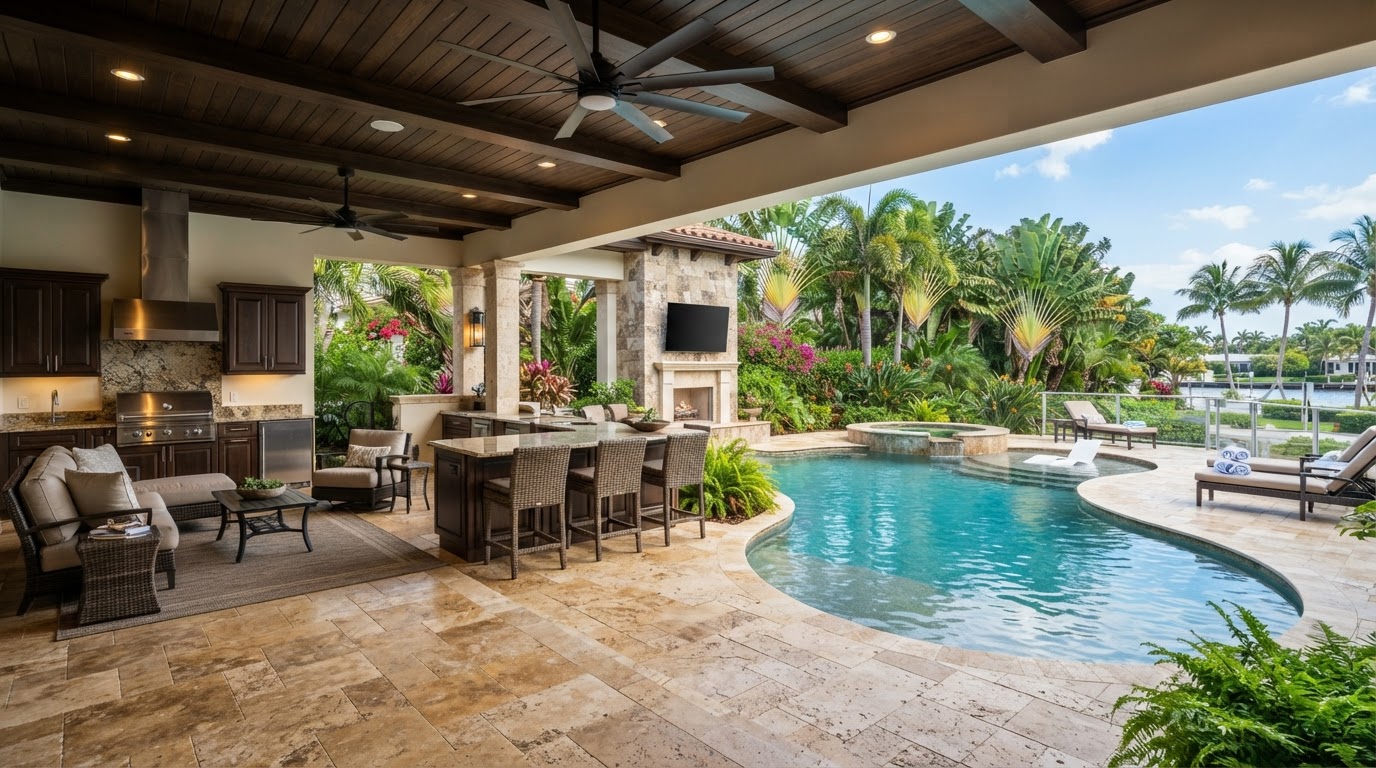
In Miami, the outdoor kitchen often connects the interior kitchen to the pool, terrace, or water view. Start the design by deciding how the outdoor kitchen relates to the indoor kitchen and the entertaining area. A covered bar that opens to the pool deck, a grill station aligned with the dining area, or a full outdoor kitchen with seating can all work depending on the layout.
When the indoor and outdoor kitchens align on the same axis and share materials, the entire home feels larger and more connected. That seamless flow is what makes a Miami outdoor kitchen feel distinctly South Florida.
2. Select Materials for the Miami-Dade Climate
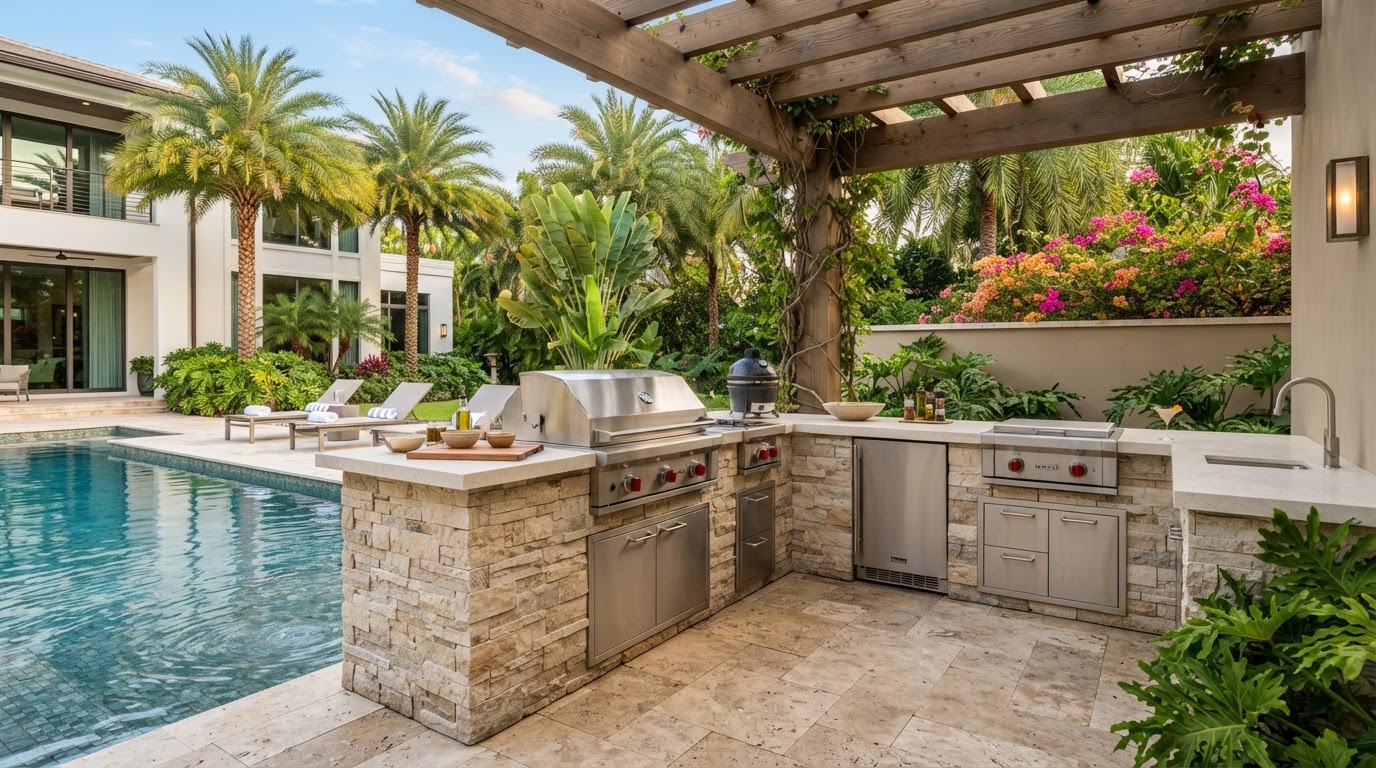
Miami-Dade County's heat, humidity, and coastal air are unforgiving. Marine-grade stainless steel is essential for grills, doors, and hardware in a Miami outdoor kitchen. Powder-coated aluminum cabinetry resists corrosion in coastal neighborhoods like Coconut Grove and Coral Gables.
For counters, granite and quartzite handle heat beautifully. Porcelain pavers that mimic stone or wood handle humidity without staining and stay cool underfoot. The right materials mean your outdoor kitchen still looks great after years of Miami summers.
3. Include Hurricane-Rated Structures
Any outdoor kitchen in Miami-Dade County should be engineered for hurricane season. Counters, cabinetry, and shade structures need to meet Miami-Dade wind-load requirements. Built-in features should be anchored and detailed to withstand storm season.
Impact-rated screens and removable panels can protect your investment. This is not a place to cut corners — it is both a safety requirement and a long-term investment in the value of your Miami home.
4. Plan for Year-Round Entertaining
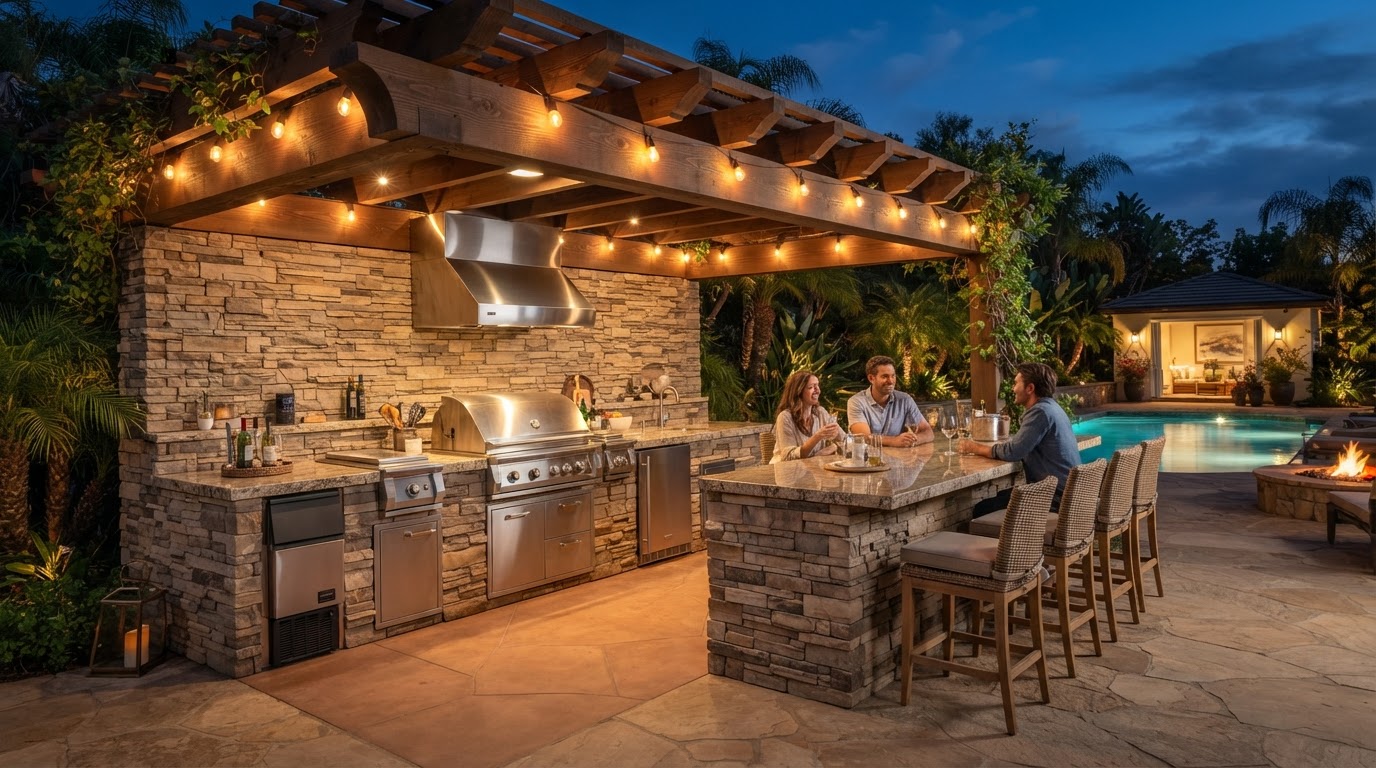
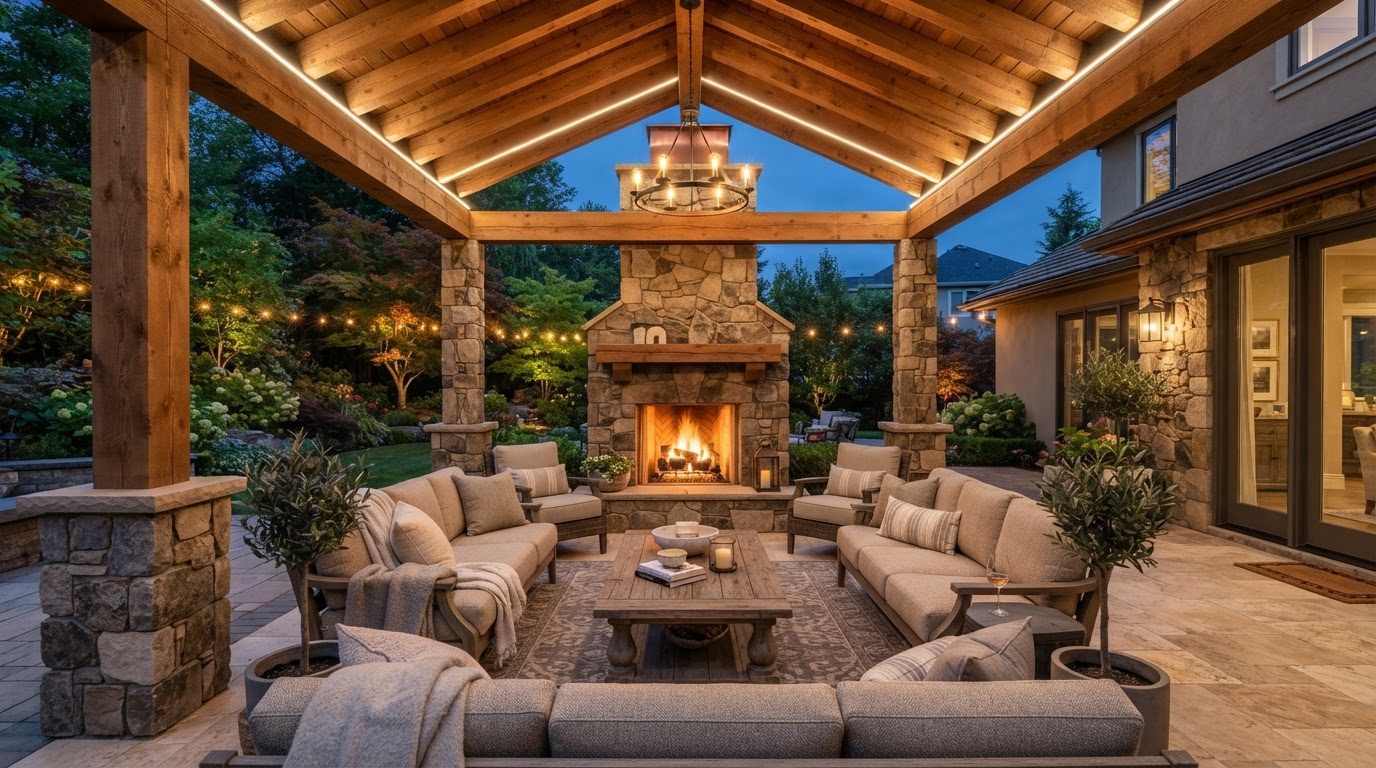
In Miami, an outdoor kitchen is a twelve-month entertaining space. An oversized counter with seating, a dedicated beverage or bar area, and a pizza oven or grill station give you the infrastructure to host effortlessly. Consider adding a covered dining area that stays comfortable even in the afternoon heat.
The best Miami outdoor kitchens handle everything from a casual weekday dinner to a large gathering without missing a beat. That versatility is what makes them so valuable in the Magic City lifestyle.
5. Navigate Miami-Dade Permitting
Outdoor kitchen projects in Miami involve Miami-Dade County building permits, hurricane-rated construction standards, and — in neighborhoods like Coconut Grove and Coral Gables — historic preservation and zoning overlays. A design-build team with local experience can guide the process efficiently.
From waterfront estates on Biscayne Bay to modern homes in Brickell and custom homes across Miami-Dade County, the right team understands the permitting, the materials, and the standard of finish that Miami properties demand.
Ready to Build Your Miami Outdoor Kitchen?
If you are planning an outdoor kitchen in Miami, Coconut Grove, Coral Gables, Brickell, or anywhere in Miami-Dade County, we would love to help you create a space that feels native to the Magic City. Foundry & Field Design + Build brings design and construction together, with deep experience in South Florida coastal construction and Miami-Dade permitting.