Home Theater Room Design: Building a Room Built for the Experience
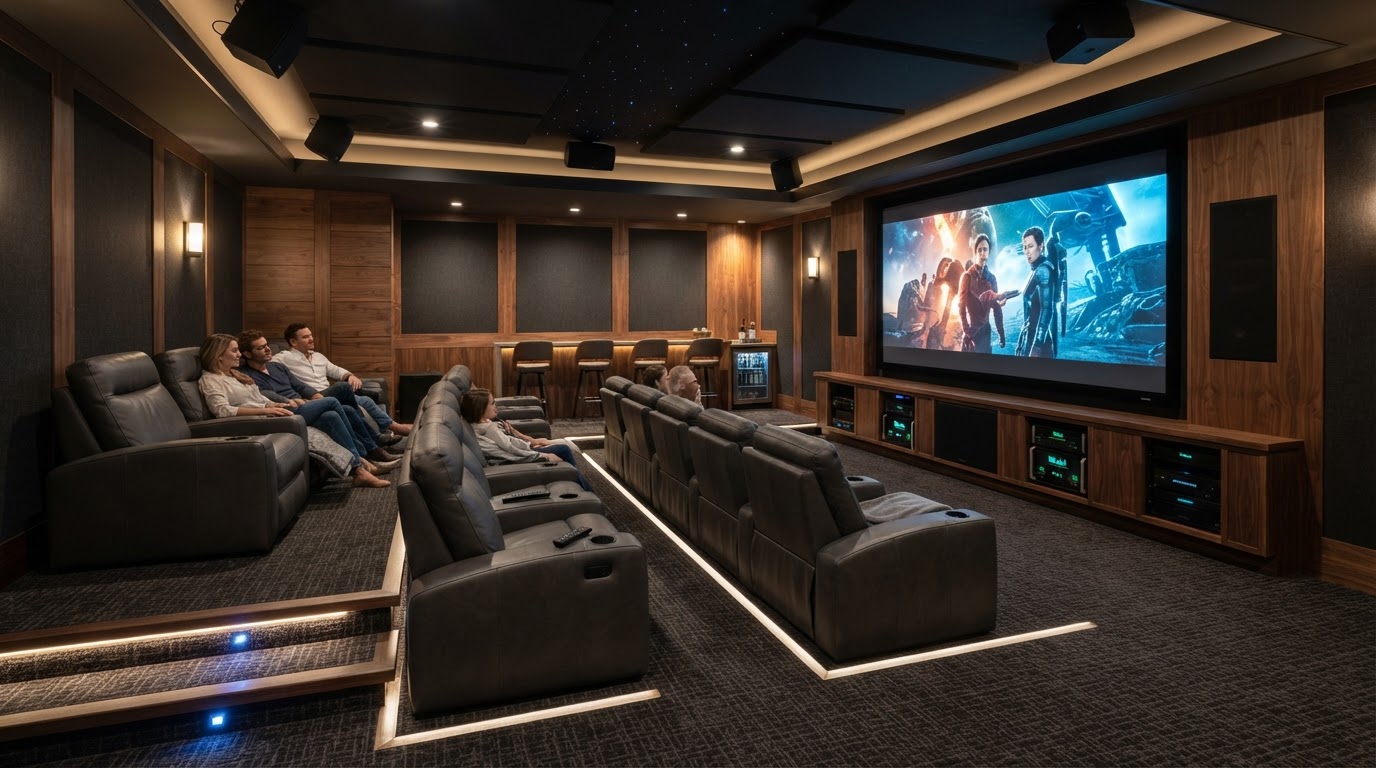
A dedicated home theater is the ultimate movie-watching room. Unlike a media room with a TV, a theater is a room designed for the experience — the sound, the picture, the comfort, and the atmosphere. Done well, a home theater becomes the favorite room in the house.
But a great home theater is more than a screen and a couch. The room has to be designed for acoustics, light control, sightlines, and comfort. The right design-build team balances all of it to create a room that feels like a real theater.
Here is how to design a home theater that sounds and looks great and feels like a real part of your home.
1. Design for Acoustics
Acoustics are the foundation of a home theater. The room has to be designed for sound — soundproofing to keep the theater quiet to the rest of the house, and acoustic treatment inside the room to make the sound clear. Wall construction, insulation, and acoustic panels all matter.
Think about how the room sounds as well as how it looks. The right acoustic design makes a theater feel like a theater.
2. Plan the Sightlines
Every seat in a home theater should have a clear view of the screen. The layout — the screen size, the seating rows, the riser heights, the distance — has to be planned so every seat is a good seat. A raised second row is often the best way to give everyone a clear view.
Think about how the room will be used and plan the sightlines for every seat. The right layout makes the theater work for a crowd.
3. Control the Light
A home theater needs total light control. Blackout shades on any windows, a dark color palette, and no light leaks from doors or hallways all keep the room dark enough for a great picture. The lighting design should include dimmable sconces and pathway lighting for safety.
Think about how the room feels with the lights off. Total light control is what makes a theater work.
4. Plan for Comfort
A home theater is a room you sit in for two hours or more, and the comfort matters. Quality theater seating with recliners, cup holders, and enough space between rows makes the experience better. Climate control keeps the room comfortable even with a full house and warm equipment.
Think about how the room feels during a long movie. The right comfort makes the theater a room you want to use.
5. Integrate the Technology
A home theater has a lot of technology — the projector or TV, the sound system, the sources, the control. The room has to be designed to integrate all of it — the screen wall, the equipment rack, the wiring, the control. The technology should feel built in, not added on.
Think about how the technology lives in the room. The right integration makes the theater feel designed.
6. Design the Room, Not Just the Tech
A home theater is a room, not just a collection of equipment. The architecture, the materials, the lighting, and the details all make the space feel like a designed room. A theater that is only about the equipment feels like a booth. A theater that is designed as a room feels like a theater.
Think about how the room feels as a space. The right design makes the theater a room you want to spend time in.
Ready to Build Your Home Theater?
If you are planning a home theater, we would love to help you create a room built for the experience. Foundry & Field Design + Build brings design and construction together to create home theaters that sound and look great and feel like a real part of your home.